Horse Racing Betting Types Explained: Singles, Multiples and Full Cover
 Available in US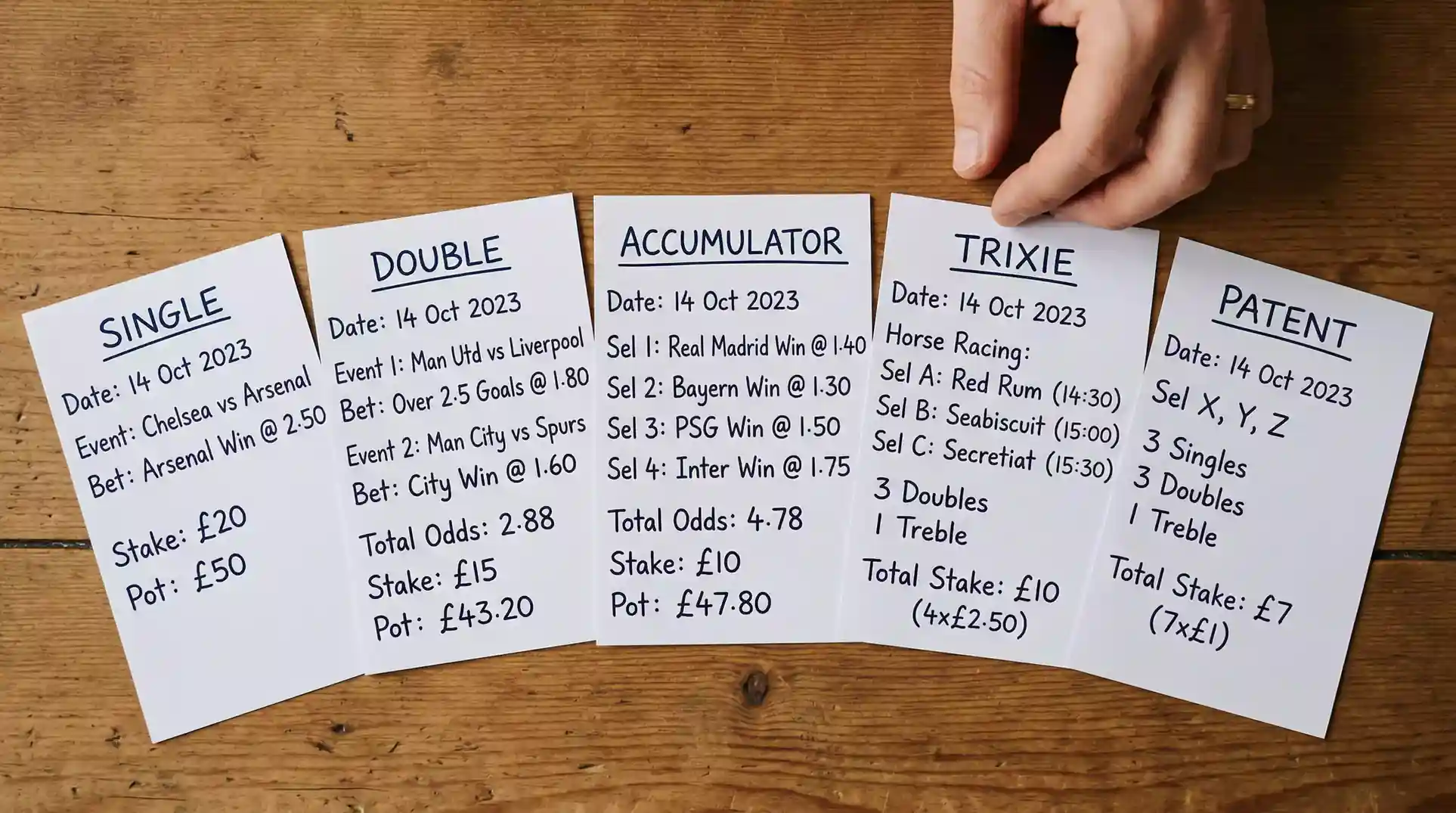
I once watched a punter at Cheltenham stare at his bet slip for a solid two minutes, turn to his mate, and ask: “What’s the difference between a yankee and a lucky 15?” His friend shrugged and said: “About four quid.” That is the level of understanding most casual bettors have of the bet types available to them – and honestly, the industry has not done much to help. Horse racing offers more bet structures than any other sport, yet the explanations you find online typically read like a maths textbook written by someone who has never actually placed a wager.
I have spent nine years analysing the UK racing market and placing my own bets across every format listed below. Some of these bet types are tools I use weekly. Others I have tried, understood, and mostly abandoned because the maths rarely works in the punter’s favour. This guide covers every major bet type with the context you need to decide which ones belong in your betting approach – and which ones are better left alone.
Single Bets: Win and Place
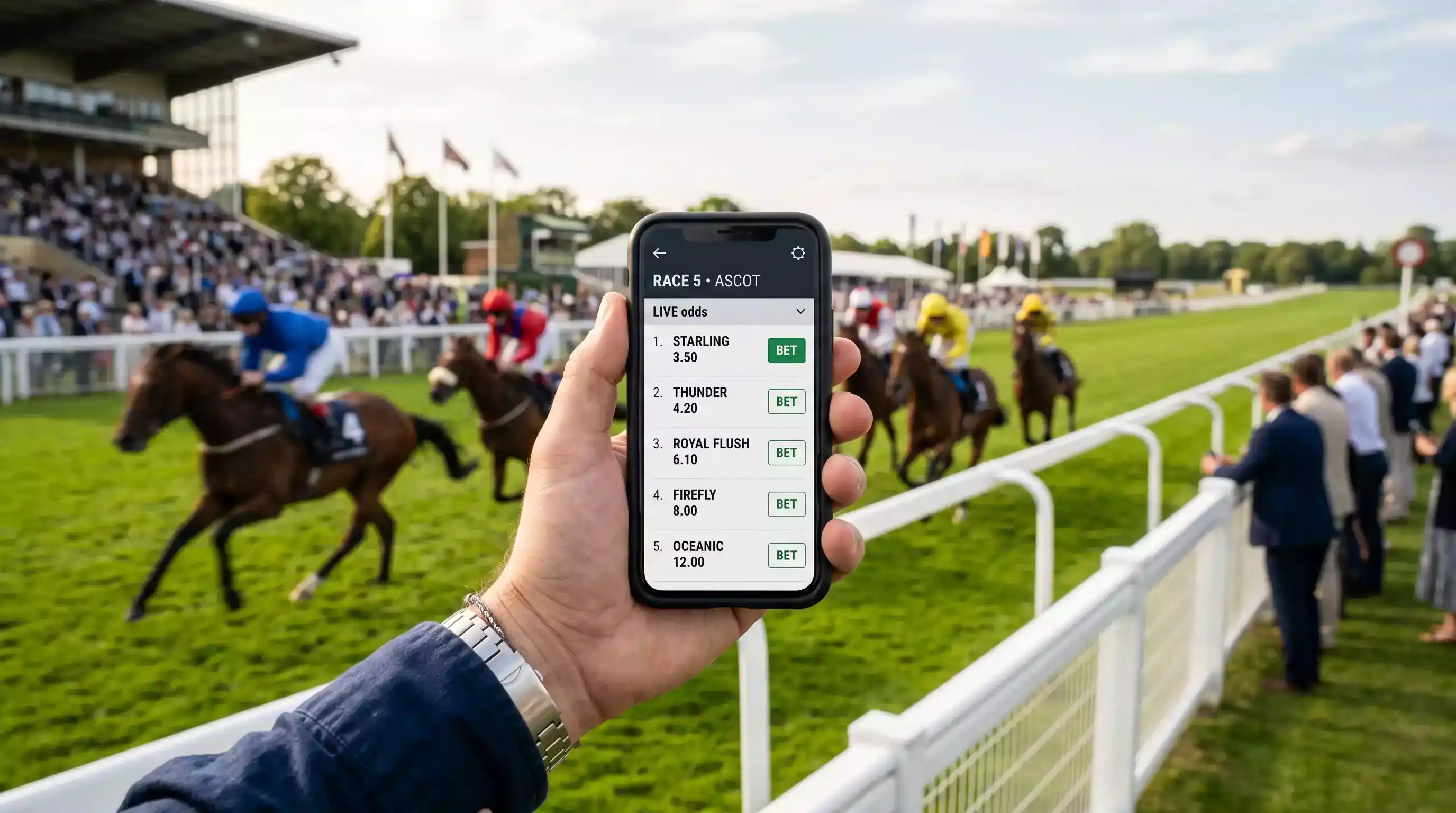
The first bet I ever placed was a win single on a horse called Sprinter Sacre. It won, I collected, and I thought this game was easy. It was not, but the bet type itself was. A win single is the purest form of horse racing bet: you select one horse, and if it finishes first, you are paid at the odds you took. If it does not win, you lose your stake. No complications, no partial outcomes.
The place bet works similarly, but with a wider target. Instead of needing your horse to win, you need it to finish in the places – typically the top two in races with five to seven runners, the top three in races with eight or more, and the top four in handicaps with sixteen or more runners. The trade-off is that place odds are a fraction of the win odds, usually one quarter or one fifth of the full price depending on the race terms.
Win singles are where I believe most punters should spend most of their time. The mechanics are transparent, the returns are predictable, and the discipline of selecting a single horse forces you to commit to a clear opinion on the race. Place bets have their uses – particularly in large, competitive handicaps where pinpointing the winner is difficult but identifying a horse that will run well is more achievable – though the reduced odds mean you need to be selective about when they offer genuine value.
A quick calculation to illustrate. A ten-pound win single at 5/1 returns sixty pounds (fifty profit plus your ten-pound stake). A ten-pound place bet on the same horse at one-fifth the odds (effectively 1/1) returns twenty pounds (ten profit plus your ten-pound stake). The place bet is safer but pays dramatically less. Understanding this trade-off is the foundation for every other bet type that follows.
Multiple Bets: Doubles, Trebles and Accumulators
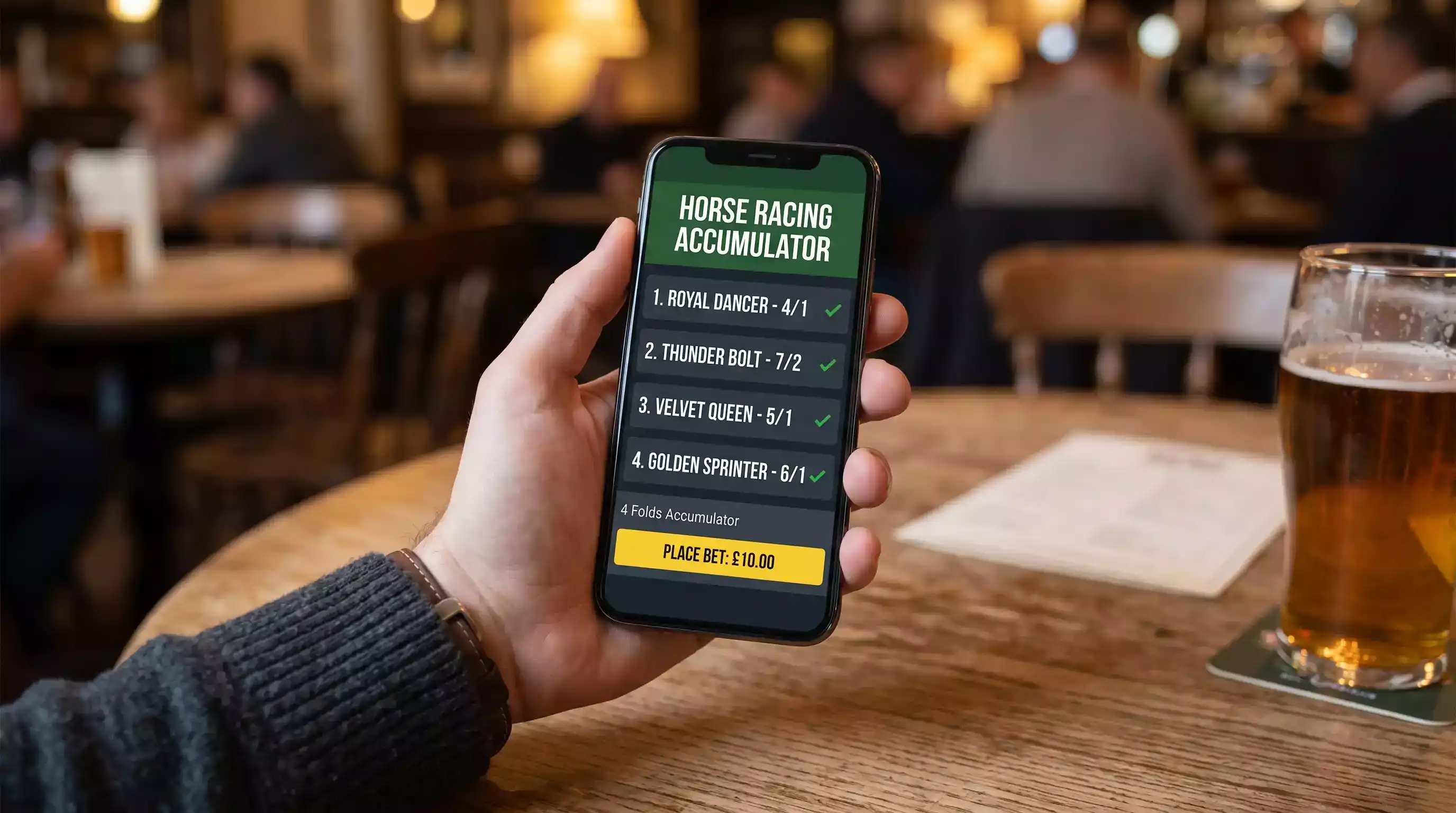
Here is where things get interesting – and where the bookmakers start to smile. A double is two selections in different races, both of which must win for the bet to pay out. The winnings from the first selection roll onto the second, compounding the odds. A treble adds a third leg, and an accumulator (or “acca”) extends the chain to four or more selections.
The appeal is obvious. A one-pound accumulator across four horses at 3/1 each returns 256 pounds. That same pound split into four separate win singles at 3/1 would return a maximum of four pounds from any one bet. The maths of compounding is seductive. The reality is less glamorous. Each additional leg multiplies not just the potential return but the probability of losing. A four-fold accumulator with selections that each have a 25% implied probability of winning has a combined win probability of just 0.39%. That is roughly one in 256 attempts.
I use doubles occasionally, usually when I have two strong opinions on the same afternoon’s racing and want to leverage one against the other. Trebles are rare in my betting. Accumulators of four or more legs are entertainment bets – I place them knowing the money is almost certainly gone, and I treat any return as a bonus rather than an expectation.
The key insight that separates sharp punters from casual ones: multiples amplify your edge if you have one, but they also amplify the bookmaker’s margin. Every selection in a multiple carries its own overround, and these compound just as the odds do. If the bookmaker has a 5% edge on each leg, a four-fold accumulator gives them a compounded edge significantly larger than 5%. The house advantage grows with every leg you add.
Full Cover Bets: Trixie, Yankee, Lucky 15 and Beyond
Full cover bets are the Swiss Army knife of horse racing wagering – versatile, intricate, and easy to misuse if you do not understand the blade count. A full cover bet takes a set of selections and generates every possible combination of doubles, trebles, and (where applicable) accumulators from those selections. Some also include singles.
A trixie uses three selections to create four bets: three doubles and one treble. You need at least two of your three selections to win in order to get any return. A yankee scales up to four selections, producing eleven bets: six doubles, four trebles, and one four-fold accumulator. Again, a minimum of two winners is required for a return.
The “lucky” variants add singles to the mix. A lucky 15 takes the same four selections as a yankee but adds four singles, creating fifteen bets in total. This means you get a return if just one horse wins, though at four-selection odds, a single winner might not cover your total outlay depending on the price. A lucky 31 uses five selections (31 bets) and a lucky 63 uses six (63 bets).
Here is the practical reality. A one-pound yankee costs eleven pounds. A one-pound lucky 15 costs fifteen pounds. The returns can be spectacular when three or four selections oblige, but the total stake escalates quickly. I have found that the trixie is the most useful of the full cover formats for horse racing because it keeps the number of bets manageable while still providing coverage across multiple outcomes. Yankees and lucky 15s have their place for festival betting – Cheltenham week, for example – when you might have strong opinions across a full afternoon’s card. Outside of those concentrated moments, the maths favours simpler structures.
One often-overlooked detail: many bookmakers offer consolation bonuses on lucky 15 and lucky 31 bets. If only one selection wins, the returns on that single might be doubled or enhanced. Always check the specific terms, because these bonuses can shift the value equation meaningfully.
Forecast, Tricast and Combination Bets
Forecast and tricast bets require you to predict the exact finishing order of a race – the top two for a forecast, the top three for a tricast. If you nail it, the dividends can be enormous. If you are one position out on any horse, you lose everything. This is high-risk, high-reward betting in its purest form.
A straight forecast requires you to name the first and second in the correct order. A reverse forecast covers both possible finishing orders between your two selections, costing double the stake. A combination forecast extends this to three or more selections, covering every possible pairing. A three-horse combination forecast, for instance, generates six bets (every permutation of first and second from three horses).
Tricasts follow the same logic but require the first three finishers in exact order. The returns can be extraordinary – I have seen tricast dividends exceed 1,000/1 in large-field handicaps – but the difficulty of predicting three finishing positions precisely makes them a low-probability proposition.
Horse racing betting generated GGY of 766.7 million pounds from online wagers alone in the 2024/25 period, and a meaningful portion of that margin comes from bets like forecasts and tricasts where the bookmaker’s edge is structurally embedded in the pool or pricing mechanism. These bets are fun, they add a layer of engagement to a race, and they can produce life-changing returns. But they are not a foundation for a sustainable betting strategy. I place them as occasional side bets when I have a strong view on a race’s shape, never as a core part of my wagering.
Choosing the Right Bet Type for the Right Race
After nine years of placing and analysing bets across these formats, my approach has become deliberately boring. Win singles make up roughly 70% of my betting by volume. Each-way bets account for another 20%, concentrated in larger fields where the place terms offer genuine value. The remaining 10% is split between occasional doubles, the odd trixie during festival weeks, and very rare forecasts when a race sets up for two obvious contenders with a clear gap to the rest of the field.
The bet type you choose should match the confidence level you have in your selections and the structure of the race. Small fields with a clear favourite? A win single or pass entirely. Large handicaps with open betting? Each-way or a trixie across your best three fancies. A five-runner novice chase where you are confident about first and second? A straight forecast might offer value. The worst approach is to use the same bet type mechanically across every race without considering the context.
Betting accounts across UK operators total around 24.4 million active users, and a significant number of those accounts are held by people who never look beyond the accumulator builder on the homepage. Understanding the full range of bet types – their mechanics, their costs, and their realistic probabilities – gives you an informational edge that most of the market does not bother to develop. That edge compounds over time, one race at a time.
What is the difference between a trixie and a yankee bet?
A trixie uses three selections and creates four bets: three doubles and one treble. A yankee uses four selections and creates eleven bets: six doubles, four trebles, and one four-fold accumulator. Both require at least two selections to win for any return. The yankee costs more per unit stake but covers more combinations and offers higher potential returns when three or four selections win.
Can I combine different bet types in one bet slip?
Most UK betting platforms allow you to add multiple bet types to a single bet slip. You might place a win single on one race and an each-way bet on another within the same slip. However, each bet is settled independently. The platform will display the total stake and individual potential returns for each bet type before you confirm.
Prepared by the Horse Racing bet Website editorial staff.