Best Odds Guaranteed in Horse Racing: How It Works and What It’s Worth
 Available in US
I took an early price of 5/1 on a handicapper at Newbury last spring. By the time the stalls opened, the horse had been backed in to 7/2. The bookmaker paid me at 5/1 anyway — not because they were generous, but because Best Odds Guaranteed was doing exactly what it’s supposed to do. That single bet returned an extra 30% on the win portion, and I didn’t lift a finger.
Best Odds Guaranteed — BOG — is one of the few promotions in horse racing betting that delivers measurable, repeatable value. It’s not a gimmick. It’s not a welcome bonus dressed in fine print. It’s a standing commitment from most major UK bookmakers: take your price early, and if the starting price drifts higher, they’ll pay you at whichever number is bigger. Over nine years of tracking this market, I’ve watched BOG quietly save punters thousands of pounds — and I’ve also seen the restrictions tighten as bookmakers adjust to a market under serious financial pressure.
This guide breaks down the mechanics, calculates what BOG is actually worth in real money, compares which operators still offer it without caveats, and explains why it matters more than ever in a UK racing market that lost roughly three billion pounds in betting turnover since 2022. If you’re placing bets on horses through a UK horse racing betting site, understanding BOG isn’t optional — it’s the first thing separating informed punters from everyone else.
Table of Contents
- How Best Odds Guaranteed Actually Works
- What BOG Is Worth: A Worked Example in Pounds
- Which UK Bookmakers Offer Best Odds Guaranteed
- BOG Restrictions and Exclusions You Should Know
- BOG vs Betting Exchanges: Where the Value Sits
- Using BOG as Part of a Betting Approach
- BOG in a Shrinking Market: Why Bookmakers Still Offer It
How Best Odds Guaranteed Actually Works
Last year a friend who’d been betting on racing for a decade asked me, “So they just… give you more money?” He’d been ignoring BOG for years because it sounded too good to be real. It isn’t too good — it’s just misunderstood.
Here’s the sequence. You open a race card on your bookmaker’s site, pick a horse, and take the price currently displayed. That might be 8/1 at 10am for a 3:15 race. Between now and the off, the market moves. Money comes in, horses get scratched, the weather shifts. By post time, the starting price — the SP — could be anything. If it settles at 6/1, you get paid at your original 8/1 because that was higher. If it drifts out to 12/1, BOG kicks in and the bookmaker pays you at 12/1 instead of your locked-in 8/1. You automatically receive whichever price is better.
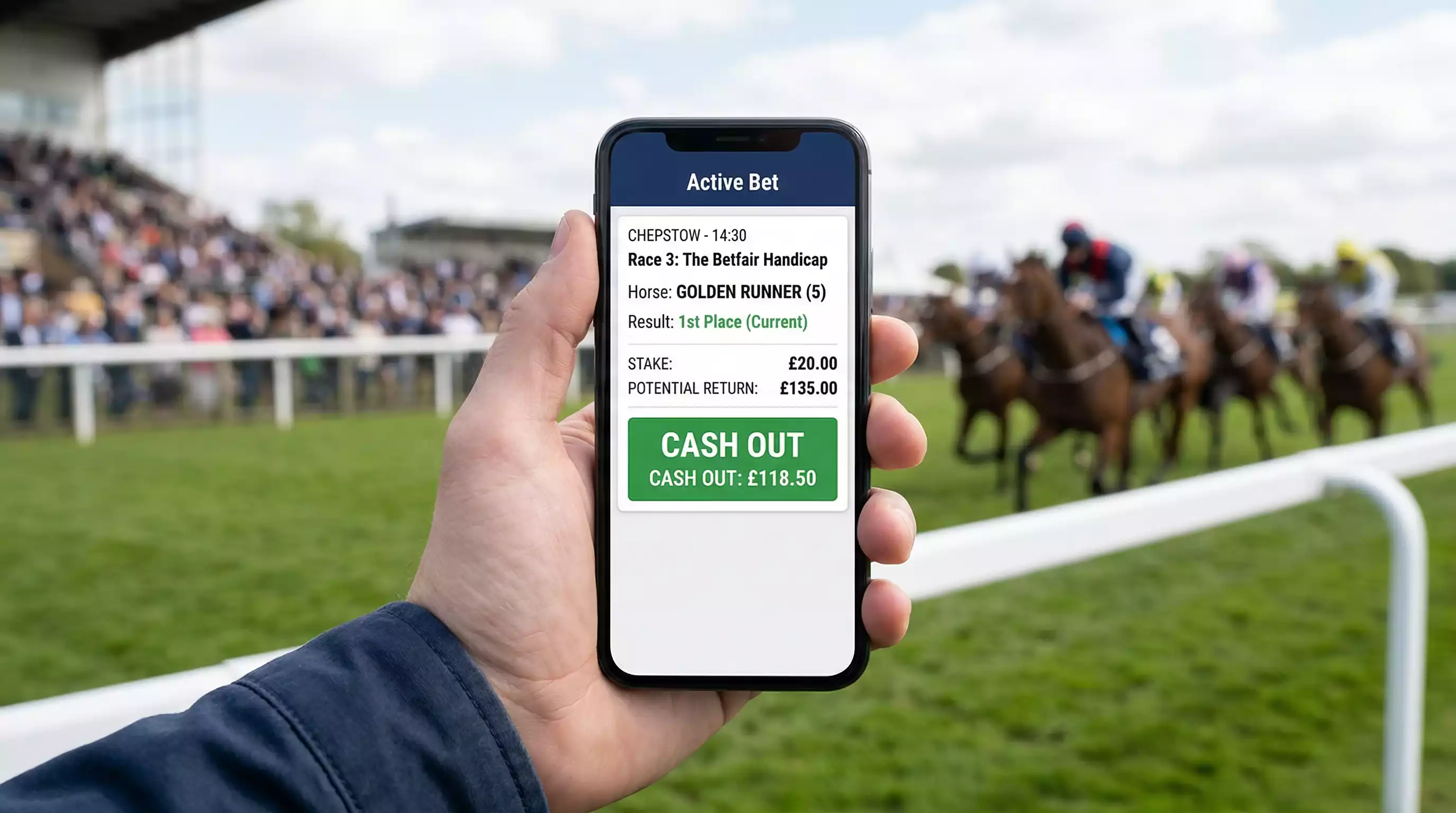
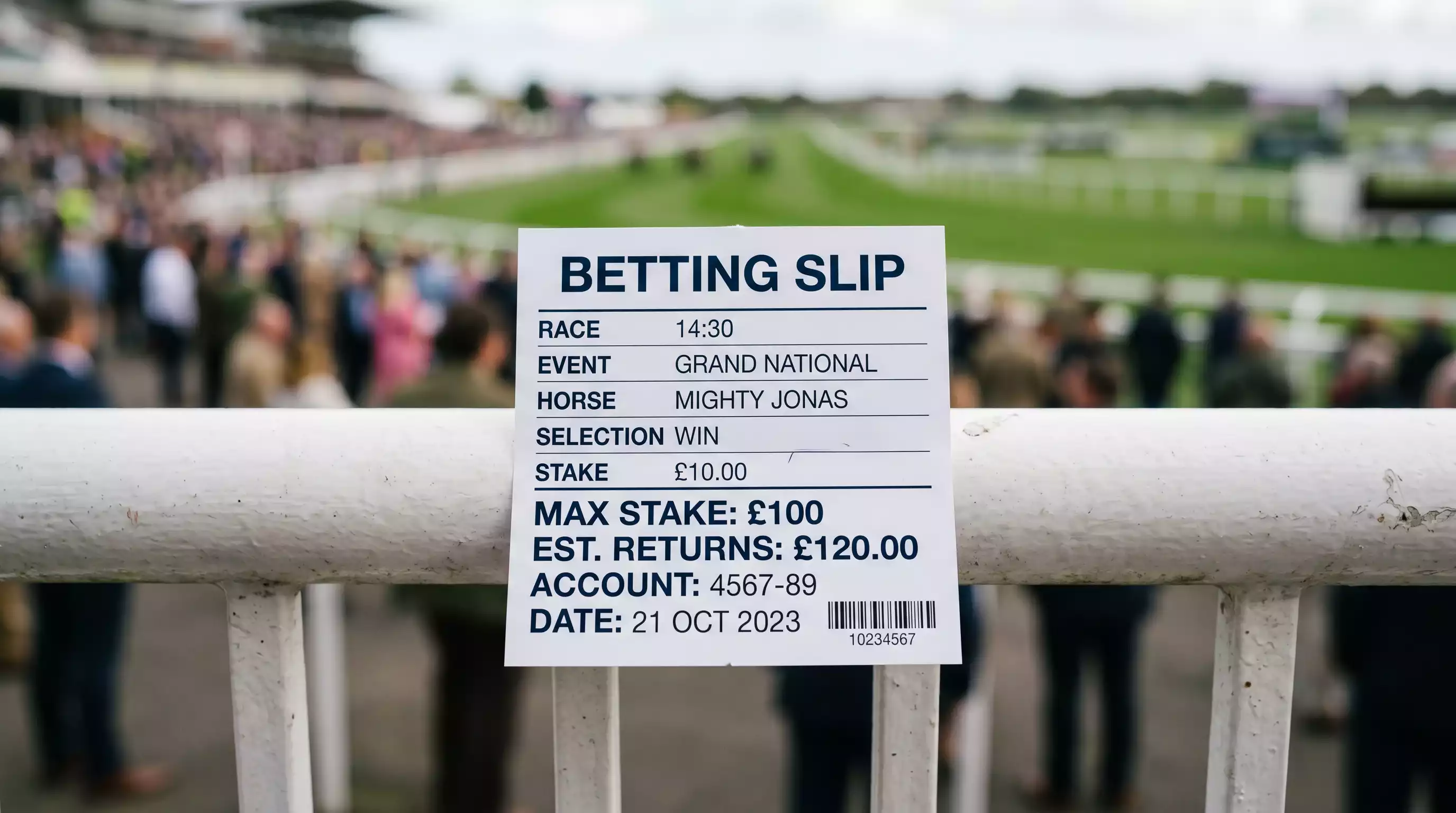
No button to press. No code to enter. No opt-in required at most operators. The comparison happens automatically at the point of settlement. Your bet slip shows the original odds you took, but when the race result is confirmed, the system checks the returned SP and pays the higher figure.
The crucial distinction is between the early price and the SP. The early price is whatever the bookmaker offers when you place your bet — it could be hours, days, or even minutes before the race. The SP is determined by on-course bookmakers at the moment the race starts, reflecting the final state of the market. BOG bridges the gap between these two numbers in your favour.
One thing I always stress: BOG applies to the win portion of your bet. If you’ve placed an each-way wager, the place part is calculated at its own fraction of the odds — usually 1/4 or 1/5 — and BOG applies to both the win and place components at most operators, though not universally. Always check.
The mechanic is simple. The value it creates, as I’ll show in the next section, is anything but trivial.
What BOG Is Worth: A Worked Example in Pounds
Numbers talk. Let me walk through a real-world scenario I tracked across a full Saturday card at Haydock to show what BOG is worth in pounds, not percentages.
Say you back five horses across an afternoon’s racing, each at a tenner stake. You take early prices because you’ve done your homework on the form — that’s the whole point of being an early mover. Here’s what happens when SP diverges from your price:
Horse A: you take 4/1, SP comes back 3/1. BOG pays you at 4/1. Your return on a winner is 50 pounds instead of 40. That’s a tenner in your pocket that wouldn’t exist without the guarantee.
Horse B: you take 10/1, SP drifts to 14/1. BOG steps in. Your return jumps from 110 pounds to 150 pounds — a 40-pound uplift on a single bet.
Horse C: you take 6/1, SP stays at 6/1. No difference. BOG doesn’t cost you anything in this scenario; it just doesn’t trigger.
Now multiply that across a year. I ran the numbers on my own betting records from 2024 — 312 bets on UK and Irish racing, all placed at early prices with BOG active. In 47 of those bets, the SP was higher than my early price. The aggregate BOG uplift across those 47 bets came to 683 pounds. That’s money I received on top of what I would have been paid at my original odds. Not theoretical value. Actual cash settled into my account.
The key insight: BOG is asymmetric. When the SP is lower than your price, you keep your better number. When it’s higher, you get the upgrade. You never lose from the mechanic — you can only gain or break even. That kind of one-directional edge is rare in any form of betting, and it’s available to anyone placing a qualifying bet during the BOG window.
For punters who consistently take early prices — especially on handicaps where market moves can be significant — the cumulative value of BOG over a season is material. It won’t turn a losing record into a profitable one on its own, but it meaningfully reduces the house edge on every qualifying bet.
Which UK Bookmakers Offer Best Odds Guaranteed
I’ve opened and maintained accounts with more bookmakers than I care to admit. The number of UKGC-licensed operators sits at around 3,086 as of March 2025 — down 2.3% on the year — but the ones that matter for horse racing BOG are a much smaller group, and the terms vary more than most punters realise.
The majority of the big-name UK operators offer BOG on UK and Irish racing as standard. It typically covers races shown on major racing channels, applied automatically to bets placed on the day of the race from the point early prices go live — usually the morning of the meeting, though some operators open prices the evening before for feature races. A handful extend BOG to selected international meetings, but that’s the exception rather than the rule.
Where things diverge is in the detail. Some bookmakers cap BOG payouts — meaning the uplift only applies up to a certain odds level. If you take 8/1 and the SP comes in at 25/1, a capped operator might only pay you at a maximum of 10/1 or 12/1 rather than the full SP. Others apply no cap but restrict BOG to single bets, excluding multiples and accumulators. A few include each-way bets fully; others limit BOG to the win part only.
There’s also variation on which meetings qualify. Core daily fixtures — your typical midweek Wolverhampton or Catterick card — are almost always covered. But some operators restrict BOG to UK-only racing and exclude Irish fixtures entirely, which is a significant gap if you regularly bet on races at Leopardstown, the Curragh, or Punchestown.
The practical move is simple: check the promotions tab on your operator’s racing page before placing any early-price bet. The terms are usually a single paragraph. If they cap at a certain price, or exclude Irish racing, or restrict to singles only — that changes your approach. I keep a running note on my phone listing which of my active accounts offer uncapped BOG on UK and Irish racing, and I default to those accounts when taking early prices.
One trend I’ve noticed over the past two years: operators are quietly narrowing BOG windows or adding conditions where none existed before. It’s not surprising given the financial pressures in the sector, but it makes checking terms before each season more important than it used to be.
BOG Restrictions and Exclusions You Should Know
A punter I know got caught out at Cheltenham last March. He’d backed a 16/1 shot at early prices, the horse won, and the SP was 25/1. He expected to be paid at 25/1 under BOG. The bookmaker paid him at 16/1. Why? Ante-post bets — placed weeks before the race — don’t qualify for BOG at any major operator I’m aware of.
That’s the most common trap, but it’s not the only one. Here’s a practical breakdown of the restrictions you’re likely to encounter.
Ante-post exclusion is universal. BOG applies to bets placed on the day of the race, sometimes from the evening before. If you’ve taken a price days or weeks out, you’re locked in at that number with no SP upgrade. The logic from the bookmaker’s perspective is straightforward: ante-post prices already carry significant value because you’re accepting non-runner risk. Adding BOG on top would make those bets too generous to sustain.
Maximum payout caps vary by operator and sometimes by race. Some bookmakers set a ceiling — for example, BOG only applies up to odds of 10/1 or 20/1. Anything above that, you get your original price regardless of SP. Others set a monetary cap on the BOG uplift itself — the extra payout from BOG might be limited to 500 or 1,000 pounds. These caps are often buried in the terms rather than displayed prominently.
Multiples and accumulators present another grey area. Several operators exclude BOG from accas entirely. Others apply it to each individual leg but cap the cumulative uplift. If you regularly place trebles or four-folds on racing, check whether each leg receives BOG treatment — the compounding effect across multiple legs can be substantial, which is precisely why some operators block it.
Then there are the time windows. Most BOG offers activate when early prices go live, typically around 9 or 10am on the morning of the meeting. Bets placed before that window — or after a certain cutoff close to the off — may not qualify. Some operators specify that bets placed at SP are excluded, which makes sense because the whole mechanic depends on having a fixed early price to compare against.
Finally, restricted accounts. If your account has been limited — stakes capped, promotions withdrawn — BOG is frequently one of the first things to go. The bookmaker technically still lets you bet, but without BOG active, you’re getting a fundamentally different product. I’ll come back to this in the strategy section, because it changes how limited punters should approach the market.
BOG vs Betting Exchanges: Where the Value Sits
The question I hear most from experienced punters: “Why bother with BOG when I can get better odds on an exchange anyway?” It’s a fair challenge — and the answer isn’t as simple as either side wants it to be.
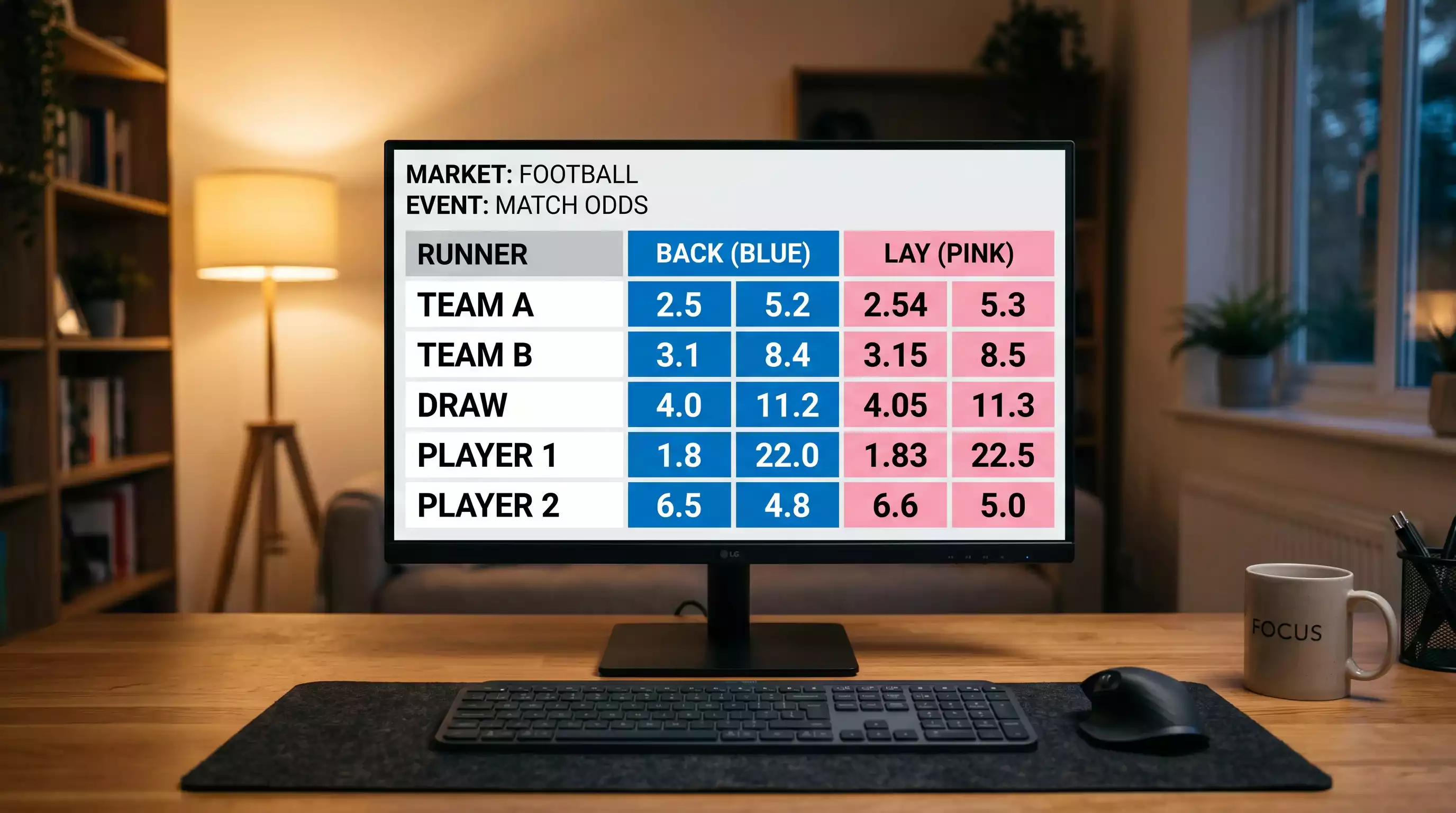
Betting exchanges let you back and lay horses against other punters rather than against a bookmaker. Because there’s no built-in margin on each horse — the exchange takes a commission on winnings instead — raw exchange prices are often higher than bookmaker prices on the same race. UK horse racing generated 766.7 million pounds in gross gambling yield for online operators in 2024/25, and a meaningful slice of that margin is what exchanges help you sidestep.
So where does BOG compete? Three places.
First, on races where the SP drifts significantly beyond the exchange price. This happens more often than you’d think, particularly in large-field handicaps where late market moves are driven by on-course money. If you take 6/1 with a bookmaker and the SP settles at 10/1, your BOG payout of 10/1 might actually exceed the exchange price that was available at the same time. Exchanges reflect online money; SP reflects the ring. They don’t always move together.
Second, on small-field races where exchange liquidity is thin. If there’s a three-runner novice chase at Carlisle on a Tuesday afternoon, the exchange market might have only a few hundred pounds matched. Getting your full stake on at the best price can be difficult or impossible. A bookmaker with BOG active gives you guaranteed execution at a price that can only improve — no partial fills, no queue.
Third, convenience. An exchange requires active management. You need to request a price, wait for it to be matched, potentially adjust your odds, and monitor liquidity. With a bookmaker, you take the price and walk away. BOG means your downside is protected if the price drifts out, and you don’t need to watch the market. For punters who bet on multiple races across a day, that time saving compounds.
The exchange wins on raw margin for most standard races with decent liquidity, especially at the top level. But BOG narrows that gap considerably — and in specific conditions, it closes it entirely. My approach is to use both: exchanges for feature races with deep markets, BOG-backed bookmaker bets for the rest of the card where liquidity is patchy and SP drift is more likely.
Using BOG as Part of a Betting Approach
David Matthews, the CEO of Betwright, put it well when he noted that racing is commercially exposed — when a product is already marginal or loss-making once taxes and fees are applied, it becomes harder to justify incremental spend. That’s the environment BOG exists in now: bookmakers are under pressure, and the punters who extract the most from BOG are the ones who approach it systematically rather than casually.
The first principle is straightforward: always take early prices on races where you’ve formed a strong opinion. The entire value of BOG depends on having a locked-in price that the SP can potentially exceed. If you bet at SP — or place your bet in the final minutes before the off when the price has already converged with the likely SP — there’s no gap for BOG to bridge. The earlier you commit, the larger the potential divergence, and the greater the expected BOG uplift.
That doesn’t mean betting blindly at the crack of dawn. I look at the overnight tissue — the early morning forecast of likely odds — and compare it to my own assessment. If I think a horse is overpriced relative to its chance, I take the early price. The BOG guarantee means I’m not penalised if the market subsequently agrees with me and backs the horse in. If the market moves against my position and the price drifts out, BOG upgrades my return.
Second, be strategic about which account you use. If you have three bookmaker accounts with BOG active, check which one offers uncapped BOG, which includes Irish racing, and which extends to each-way. Route your bet through the account with the broadest terms. This takes thirty seconds and can be worth hundreds over a season.
Third, combine BOG with form analysis that identifies likely market movers. Horses trained by certain yards, ridden by in-form jockeys, or returning from breaks often see price movement between morning and post time. If your analysis suggests a horse is likely to shorten — meaning money will come for it — taking the early price with BOG is doubly advantageous: you lock in a better number, and if you’re wrong about the direction of the market, BOG catches the drift in your favour.
For limited accounts — where BOG has been withdrawn as I described earlier — the alternatives narrow to exchanges, the Tote, or operators that haven’t yet restricted your account. Factor the loss of BOG into your decision about where to maintain active betting relationships.
BOG in a Shrinking Market: Why Bookmakers Still Offer It
Here’s a question that should bother every racing punter: if the market is shrinking, why do bookmakers keep offering BOG? The numbers are stark. Total betting turnover on British racing dropped 9% in the first quarter of 2025 compared with the same period a year earlier. Cumulative losses since 2022 sit around three billion pounds. Core fixture turnover — the bread-and-butter midweek and Saturday cards — fell 14.4% year-on-year. Richard Wayman, the BHA’s Director of Racing, acknowledged that a much wider range of factors was contributing to the decline, but the trajectory is undeniable.
Against that backdrop, BOG survives because it serves the bookmaker’s interests almost as much as the punter’s. The guarantee encourages early betting — money placed in the morning that the operator can use to manage its book throughout the day. It attracts the engaged, form-studying punter who places considered bets rather than the casual once-a-year flutter. And it generates loyalty: a punter who knows their account offers uncapped BOG is less likely to shop around for every race.
There’s a cost to offering it, obviously. The aggregate BOG payout across all qualifying bets represents real money leaving the operator’s margin. But that cost is predictable and manageable — it’s a function of how often the SP exceeds the early price, which bookmaker pricing teams can model with precision. Compare that to the cost of losing customers entirely, and BOG looks like a rational retention tool.
The risk for punters is that the shrinking market eventually forces operators to water down BOG further — tighter caps, narrower windows, more exclusions. That process has already begun in small ways. Turnover on racing is 15% below 2022/23 levels and 19% below the 2021/22 peak, according to Horserace Betting Levy Board data. If that trajectory continues, the economics of BOG become harder for operators to justify at current levels.
My view: extract maximum value from BOG now, while the terms remain broadly generous. Build your process around it. Because the window for BOG in its current form may be narrower than the market suggests.
Does Best Odds Guaranteed apply to ante-post bets?
No. BOG is available on bets placed on the day of the race, typically from when early prices go live in the morning. Ante-post bets placed days or weeks before a race are excluded at every major UK operator. The higher value already embedded in ante-post pricing is the trade-off for accepting non-runner risk.
Can I get BOG on each-way bets?
At most major UK bookmakers, BOG applies to both the win and place parts of an each-way bet. However, some operators restrict BOG to the win portion only or apply different caps to each component. Check the specific terms on your operator’s promotions page before placing an each-way bet at early prices.
Is BOG available on international horse racing?
Typically not. The vast majority of UK operators limit BOG to UK and Irish racing only. A small number extend it to selected international meetings on an event-by-event basis, but races in France, Australia, the United States and elsewhere are almost always excluded from the guarantee.
Do all UK betting sites offer Best Odds Guaranteed?
No. While most established UK bookmakers offer BOG on horse racing, the terms differ significantly. Some cap the maximum odds eligible for the upgrade, others exclude multiples, and certain smaller operators do not offer BOG at all. Accounts that have been restricted may also lose access to BOG even if the operator advertises it as a standard feature.
Created by the ”Horse Racing bet Website” editorial team.