
Problem Gambling and Horse Racing: UK Data and Support Resources
 Available in US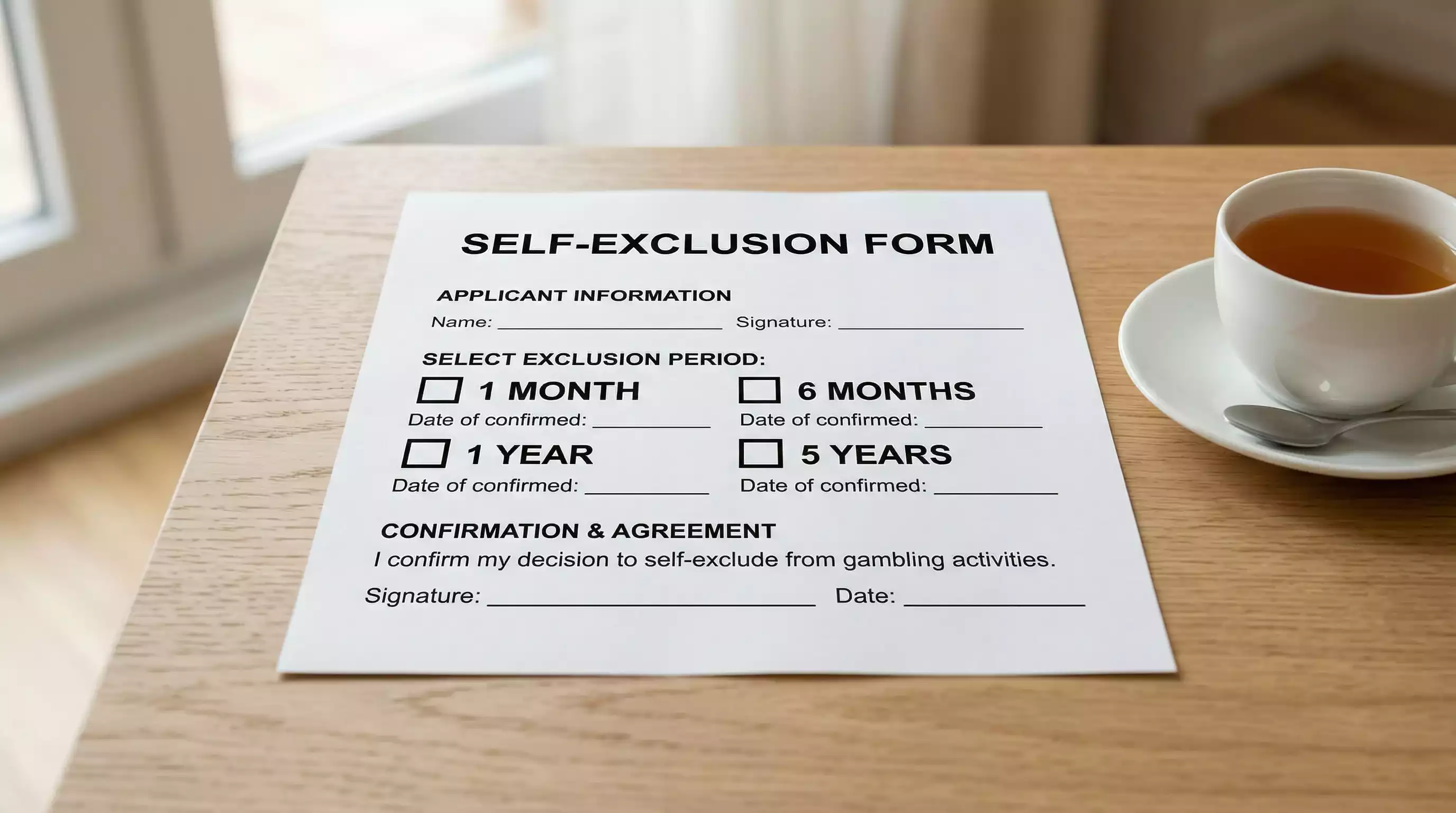
I write about horse racing betting for a living. I analyse odds, track market movements, and spend my working days immersed in an industry built on wagering. I also know, from personal observation over nine years, that some people in this space are not having fun. They are not making analytical decisions or enjoying the sport. They are trapped in patterns they cannot control, spending money they do not have, and hiding the damage from the people closest to them. This article exists because the horse racing betting industry has a responsibility to talk about problem gambling with the same rigour it applies to odds analysis and market data – not as a box-ticking disclaimer at the bottom of a page, but as a real issue that affects real people within the community I serve.
Problem Gambling Prevalence: What the PGSI Data Shows
The Problem Gambling Severity Index (PGSI) is the standard screening tool used in UK population surveys to estimate the prevalence of gambling-related harm. It consists of nine questions that assess behaviours and attitudes associated with problematic gambling, scored on a scale from 0 to 27. A score of 0 indicates non-problem gambling. Scores of 1 to 2 indicate low-risk gambling. Scores of 3 to 7 indicate moderate-risk gambling. A score of 8 or above indicates problem gambling.
The UK Gambling Commission’s Gambling Survey for Great Britain (GSGB) Year 2 data found that 2.7% of adults scored 8 or above on the PGSI. Men were more than twice as likely as women to be classified in this category – 6% of men compared with 2.8% of women. Among 18 to 24-year-olds, the figure was approximately 10%, which is the highest rate of any age group and a number that should concern anyone involved in the industry.
The gender disparity is important context. Around 16% of men reported gambling in the past four weeks (excluding lottery), compared with 4% of women. Men are both more likely to gamble and more likely to experience gambling-related harm, which means that interventions and support resources need to reflect this demographic reality rather than treating all gamblers as a homogeneous group.
These are population-level statistics. They do not tell you about the individual who is betting more than they can afford, lying about their losses, or using gambling as a coping mechanism for other problems. The data provides scale; the human experience provides urgency. Both matter.
Self-Exclusion and Limit-Setting Tools Available to Punters
Every UKGC-licensed betting operator is required to provide a suite of responsible gambling tools. These are not optional extras – they are licence conditions, and operators face sanctions for failing to make them accessible and effective.
Deposit limits allow you to set a maximum amount you can deposit within a chosen time period (daily, weekly, monthly). Once the limit is reached, no further deposits are possible until the period resets. Loss limits cap the net amount you can lose within a period. Session time limits alert you or log you out after a specified duration of continuous gambling. Reality checks are periodic pop-ups that remind you how long you have been playing and how much you have won or lost.
Self-exclusion is the most comprehensive tool. You can self-exclude from an individual operator for a minimum of six months, during which time you cannot log in, deposit, or bet. GAMSTOP is the national self-exclusion scheme that allows you to exclude from all UKGC-licensed online gambling operators simultaneously. Registration is free, and exclusion periods are six months, one year, or five years.
I want to be direct about something. These tools work, but only if you use them proactively. Setting a deposit limit before you need it – when you are calm, rational, and in control – is dramatically more effective than trying to impose discipline in the moment, when a losing streak has triggered the urge to chase. The value of these tools is not as a last resort; it is as a first line of defence. I use deposit limits myself, not because I have a gambling problem but because I recognise that removing the option to overspend is easier than relying on willpower alone.
Where to Get Help: Resources for UK Horse Racing Bettors
If you or someone you know is experiencing gambling-related harm, support is available. The following resources are free, confidential, and staffed by trained professionals.
The National Gambling Helpline is operated by GamCare and available on 0808 8020 133, open 24 hours a day, seven days a week. GamCare also offers live chat support through its website and face-to-face counselling in locations across the UK. The Gordon Moody Association provides residential treatment programmes for people with severe gambling problems, as well as online support groups and relapse prevention programmes.
GambleAware is the charity funded by the gambling industry (through statutory contributions) that commissions research, education, and treatment services. Its website provides information, self-assessment tools, and referral pathways to local support services. Gamblers Anonymous runs peer support meetings across the UK, both in person and online, following a twelve-step model.
Roughly 48% of UK adults gambled in some form in the past four weeks. Within that enormous population, the 2.7% who score 8 or above on the PGSI represent approximately 1.5 million people. The support infrastructure exists to help them, but it only works if people know it is there and feel confident enough to reach out. One of the failures of the betting industry – including the affiliate and content sector I work in – is that we mention GambleAware as a footer link and consider the job done. It is not done. The resources need to be visible, accessible, and normalised, not buried beneath promotional content.
What Bookmakers and the Industry Are Required to Do
Licensed operators have specific obligations under the UKGC’s Licence Conditions and Codes of Practice regarding customer interaction and the identification of gambling harm. These include monitoring customer activity for indicators of potential harm (such as escalating deposits, chasing losses, or irregular play patterns), interacting with customers who display these indicators, and taking action that may include communication, tool recommendations, or account restrictions.
Brant Dunshea, the BHA’s CEO, spoke about the horseracing industry’s precarious financial position and the devastating forecasts around jobs and communities if the economic foundations weaken further. That concern is legitimate, but it exists in tension with the equally legitimate concern that the industry’s economic health should not come at the expense of individual welfare. The horse racing ecosystem depends on betting revenue, and betting revenue depends on customers. Protecting those customers from harm is not just an ethical obligation – it is an economic necessity, because problem gambling destroys the long-term customer relationship that the industry’s financial model depends on.
The regulatory direction is toward more proactive intervention: earlier identification of at-risk customers, more robust affordability assessments, and greater accountability for operators that fail to protect vulnerable individuals. Whether the current calibration is right – whether it catches the people who need help without alienating those who do not – is a matter of ongoing, heated debate. What is not debatable is that the obligation exists and that the consequences of failure are severe, both for the individuals affected and for the industry’s licence to operate.
Talking About Gambling Harm Without Stigma
The horse racing community has a complicated relationship with problem gambling. The sport depends on betting revenue. The culture celebrates big-race punting. And the line between enthusiastic engagement and harmful behaviour is not always visible from the outside – or, for that matter, from the inside. I have known punters who bet heavily and happily for decades. I have known others who appeared to be doing the same thing but were privately drowning.
The difference is not about amounts. It is about control. If you are betting within a budget you have set in advance, if you can stop when the budget is spent, if a losing day does not bleed into the rest of your life – you are gambling recreationally. If any of those conditions are not met, it is worth pausing and honestly assessing whether your relationship with betting is working for you. That assessment is not weakness. It is the most important analytical exercise you can perform as a horse racing bettor, and it deserves the same rigour you would apply to reading form or calculating odds.
If this article has prompted any reflection, the resources listed above are there for exactly this moment. A phone call, a chat message, a meeting – any of these can be the start of a different relationship with gambling. And if you are reading this as someone whose betting is genuinely enjoyable and under control, consider sharing this information with someone in the racing community who might need it. Sometimes the most valuable thing you can do is make sure the person next to you knows where to find help.
What is the PGSI and what does a score of 8 or above mean?
The Problem Gambling Severity Index is a nine-question screening tool used in UK population surveys to assess gambling-related harm. Each question is scored 0 to 3, giving a maximum total of 27. A score of 8 or above indicates problem gambling – a level of gambling behaviour associated with negative consequences including financial difficulty, relationship problems, and psychological distress. The GSGB survey found that 2.7% of UK adults fall into this category.
How does GAMSTOP self-exclusion work for horse racing sites?
GAMSTOP is a free national scheme that allows you to self-exclude from all UKGC-licensed online gambling operators simultaneously. You register on the GAMSTOP website, choose an exclusion period of six months, one year, or five years, and your details are shared with all participating operators. During the exclusion period, you cannot create new accounts, log in, or place bets with any UKGC-licensed online operator. The scheme covers horse racing betting sites, casino sites, and all other online gambling platforms licensed in the UK.
Prepared by the Horse Racing bet Website editorial staff.