Horse Racing Betting Account Restrictions: Why Accounts Get Limited
 Available in US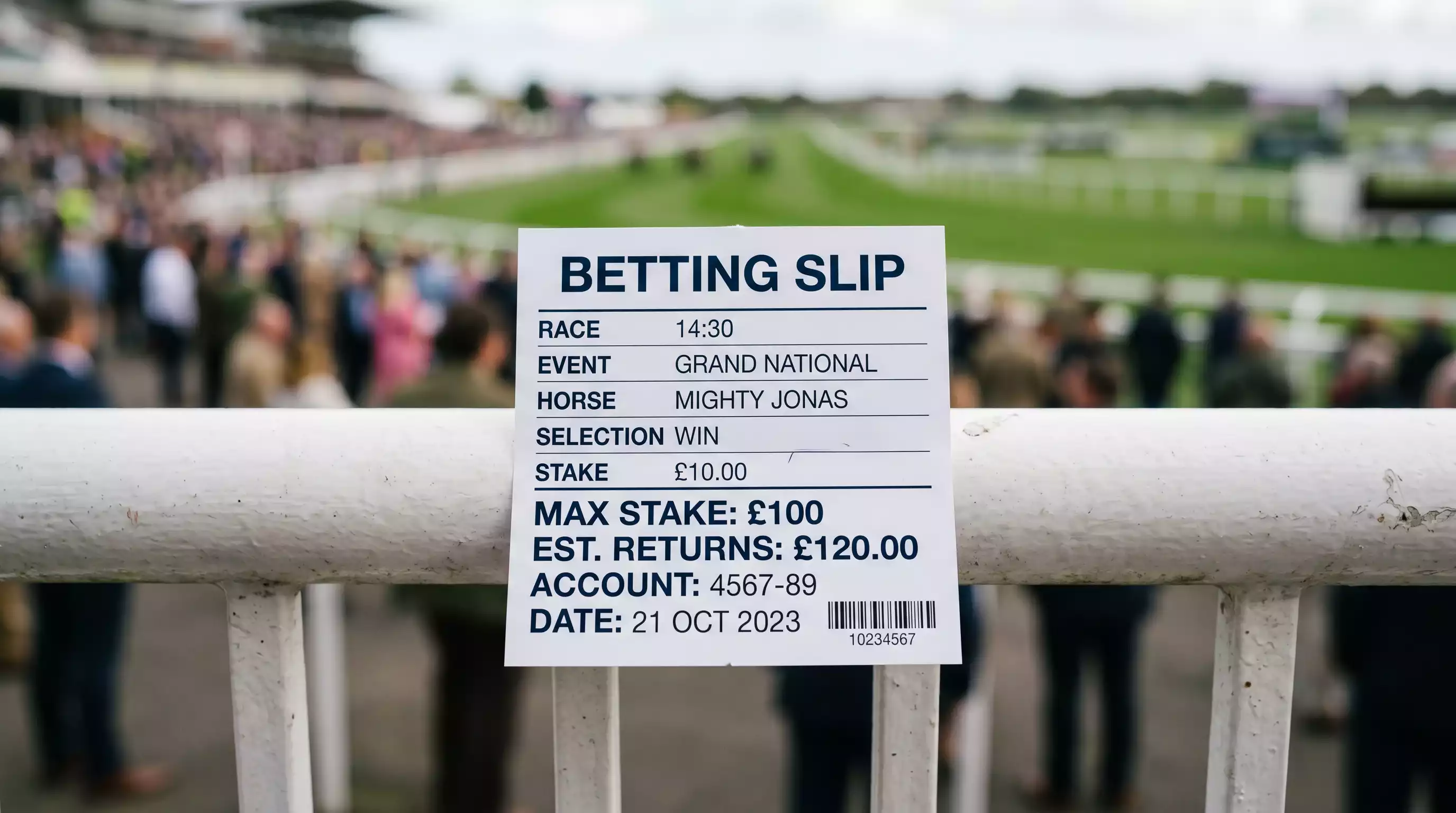
I got my first account restricted in 2019. The maximum stake on horse racing was reduced to two pounds – on every race, every market, without explanation or warning. The account was with an operator I had used for three years, and the restriction came roughly six weeks after a particularly profitable run on handicap hurdles. No email, no call, just a sudden discovery that the bet slip would not accept anything above two pounds. I was, in the language of the industry, “gubbed.” That experience has since been repeated across two more operators, and it is one of the most common frustrations reported by profitable horse racing bettors in the UK.
Why Bookmakers Restrict Winning Horse Racing Accounts
The answer is unpalatable but simple: bookmakers are commercial businesses, and consistently profitable customers reduce their margins. When a bettor demonstrates a sustained ability to beat the market – taking value odds, timing bets to capture price movements, winning at a rate that exceeds the overround – the operator faces a choice: absorb the cost of a losing customer or restrict the account to limit exposure. Almost without exception, they choose the latter.
Nevin Truesdale, the former CEO of the Jockey Club, addressed this dynamic when he criticised the Gambling Commission for seeming to want to reduce gambling to just small-stakes gamblers. The restriction of winning accounts reinforces this pattern: the punters who are most engaged, most knowledgeable, and most valuable to the sport as consumers of the betting product are precisely the ones whose accounts are limited. The casual bettor who loses steadily is a welcome customer. The sharp punter who wins selectively is not.
Vaughan Lewis, former Chief Strategy Officer at Evoke, made the point even more explicitly: as an operator, you cannot accept, on its own, that a customer’s source of income is gambling winnings. There has to be an original source of income from before that. So if you have been a professional punter for the last ten years, you have essentially got no chance. The regulatory framework around source of funds checks actively disadvantages professional bettors, and the commercial framework around account restrictions compounds the problem.
The result is a two-tier system. Losing bettors enjoy full account access, generous promotions, and high maximum stakes. Winning bettors face reduced limits, stripped promotions, and in some cases outright account closure. The industry justifies this as commercial risk management. Critics call it punishing success. Both descriptions are accurate.
Common Triggers for Account Limitations
Account restrictions do not arrive randomly. Over years of tracking my own experience and those of other affected punters, identifiable patterns emerge.
Consistent winning over a sustained period is the primary trigger. A single lucky weekend will not get you restricted; six profitable months will. The operators’ trading teams monitor net position by customer, and accounts that show sustained positive returns are flagged for review. The threshold varies, but my experience suggests that a customer who is net-positive by more than a few hundred pounds over a quarter is likely to attract attention.
Taking early prices that subsequently shorten is another common trigger. This pattern, known as “beating the tissue” (the tissue being the bookmaker’s opening price), suggests that the customer has form-analysis skills that allow them to identify value before the market corrects. Operators view this as a sign of sophisticated betting rather than luck, and it accelerates the path to restriction.
Exploiting promotional offers – particularly free bets and enhanced odds – in a systematic way triggers restrictions faster than almost any other behaviour. The industry calls this “bonus abuse” or “promo abuse,” though the term is contentious given that the offers are publicly advertised and legally available to all customers. The practical reality is that using promotions profitably and consistently marks your account as one that costs the operator money, which invites the same commercial response as winning on standard bets.
Betting exclusively on horse racing can itself be a trigger, because the operator’s margin on racing is thinner than on casino or football products due to the additional levy cost. A customer who only bets on racing and wins is a double negative: they consume the operator’s thinnest-margin product and generate no offsetting revenue from higher-margin verticals.
What Limited Punters Can Do: Exchanges, Tote and Alternatives
Account restrictions are permanent in most cases. Appeals are rarely successful, and once an operator has decided to limit your account, the decision is effectively final. The practical response is to diversify your betting across platforms that are structurally unable or unwilling to restrict winning accounts.
Betting exchanges are the most important alternative. Exchanges do not take a position against you – they match your bet with another customer, earning a commission on winning bets rather than profiting from your losses. This model means exchanges have no commercial incentive to restrict winners. A profitable customer on an exchange is a profitable customer for the exchange, because more activity means more commission revenue. For the restricted horse racing bettor, an exchange account is essential.
The Tote is another option. Pool betting spreads your wager across a collective pool rather than matching it against the bookmaker’s book, which means the Tote does not face the same liability concerns as fixed-odds operators. Tote accounts are not typically restricted for profitability, though the pool structure means you accept the uncertainty of not knowing your final dividend until the race is settled.
On-course bookmakers offer a third avenue. Betting at the track with independent bookmakers who price their own markets provides access that no online operator can restrict. The prices may not always match the best online odds, but the ability to bet without limits – at least within the bookmaker’s own comfort zone – has genuine value for the punter whose online accounts have been stripped.
The share of bettors reporting use of unlicensed operators rose from 3.6% to 4.9% between 2023 and 2025. Among high-stakes bettors, one in three acknowledged using unregulated sites. Account restrictions are undoubtedly a contributing factor in pushing some punters toward the unlicensed market, where no restrictions apply – but the risks of that choice are substantial and well-documented.
The Industry Debate on Account Restrictions
The practice of restricting winning accounts has been a source of industry controversy for years, and the debate shows no sign of resolution. The Gambling Commission has investigated the issue but stopped short of banning account restrictions outright, instead requiring operators to provide clearer communication when accounts are limited and to give customers the opportunity to appeal.
Racing industry bodies, including the BHA, have argued that account restrictions damage the sport’s betting product by driving engaged, knowledgeable bettors away from the regulated market. A restricted punter who migrates to an exchange or the unlicensed market generates no promotional engagement and reduced (or zero) levy contribution for the sport.
Among higher-value bettors, one in three reported using unregulated sites in the past year – a figure that partly reflects the frustration of having regulated accounts restricted to the point of being unusable. The connection between restrictions and unlicensed market growth is not lost on the industry, and some operators have begun experimenting with alternative approaches: offering restricted customers reduced-margin racing markets rather than blanket stake limits, or maintaining limited promotional access to keep the customer relationship alive.
For the individual punter facing restrictions, the best response is pragmatic rather than indignant. Maintain as many accounts as possible, use exchanges for your primary racing betting, exploit Tote pools where the value is favourable, and accept that account restrictions are a commercial reality that is unlikely to change fundamentally. The restricted punter is, ironically, the punter the market has validated as skilled. The restriction itself is proof that your analysis works. The challenge is finding platforms where you can continue to apply it.
Can a bookmaker close my account without a reason?
Under UK licensing conditions, bookmakers are not required to provide a detailed reason for restricting or closing an account, though the Gambling Commission has pushed for greater transparency. Operators must inform you that your account has been restricted, and they must allow you to withdraw any remaining balance. You can appeal through the operator’s complaints process and escalate to an Alternative Dispute Resolution provider, but successful appeals against commercially motivated restrictions are uncommon.
Do betting exchanges restrict accounts like traditional bookmakers?
Generally, no. Exchanges earn commission on winning bets rather than profiting from customer losses, so they have no commercial incentive to restrict profitable customers. A winning bettor on an exchange generates more commission revenue through higher activity, making them a desirable customer rather than a costly one. This structural difference makes exchanges the primary alternative for horse racing bettors whose accounts with traditional bookmakers have been limited.
Published by the Horse Racing bet Website team.