Going and Ground Conditions in Horse Racing: What Bettors Need to Know
 Available in US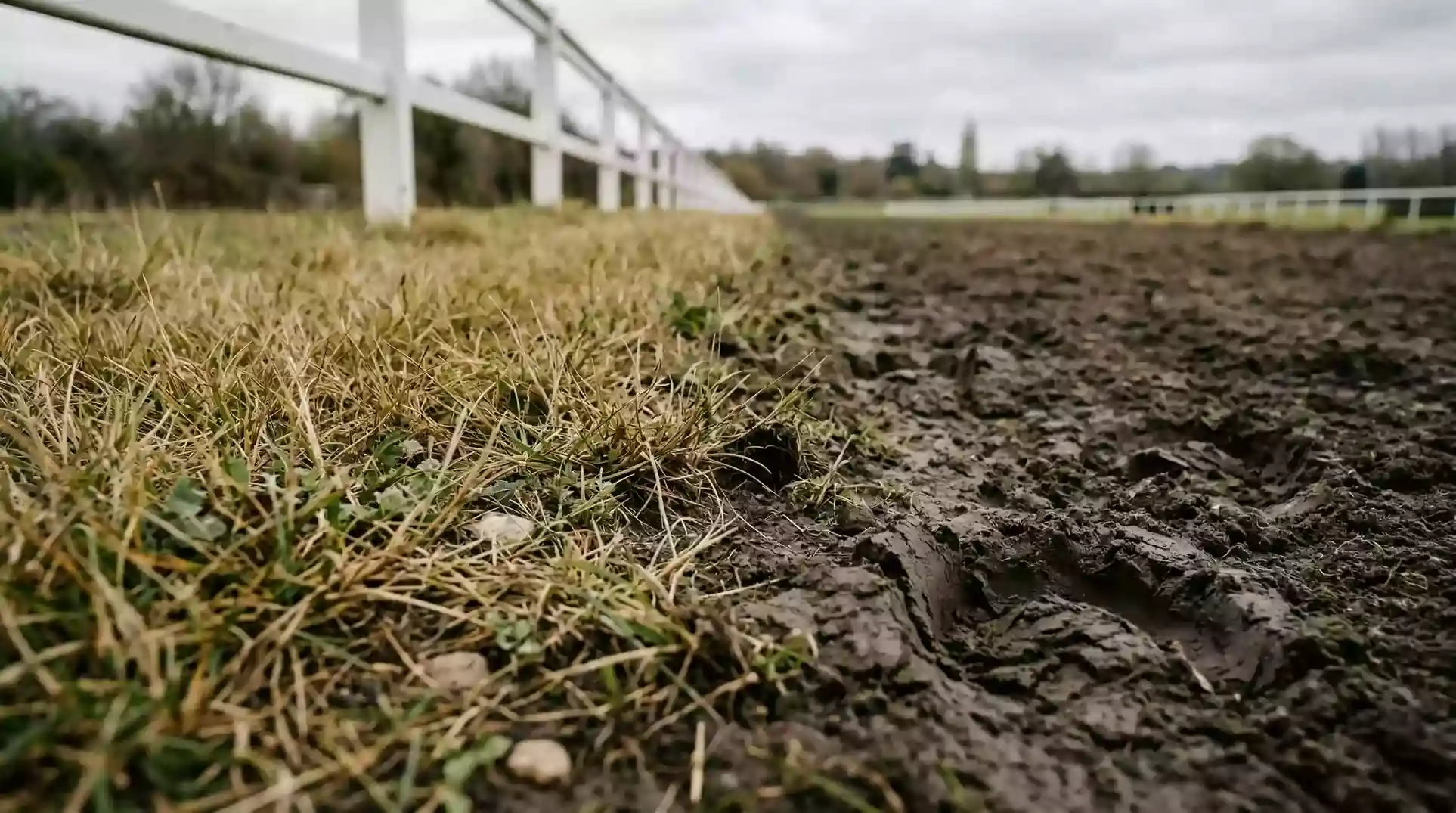
The first time the going cost me money was at Newbury in November 2017. I had backed a horse with brilliant form on good ground, and the overnight rain turned the track into something closer to a ploughed field. My selection finished tailed off last, barely able to pick its feet up. The winner was a 14/1 shot with a string of victories on soft and heavy – a horse I had dismissed because its overall form figures looked mediocre. That afternoon taught me something I now consider non-negotiable: ground conditions are not a footnote in horse racing. They are a primary variable, and ignoring them is the equivalent of backing a sprinter in a marathon because you liked its 100-metre times.
The Going Scale: From Hard to Heavy
The UK uses a standardised going scale to describe the state of the ground on race day. On turf, the scale runs from hard (the firmest) through firm, good to firm, good, good to soft, soft, soft to heavy, and heavy (the most waterlogged). All-weather surfaces use a separate scale: fast, standard to fast, standard, standard to slow, and slow.
In practice, hard ground is rare on UK racecourses – you might see it during an exceptional summer drought, but most courses will water the track before letting it reach that extreme. Firm is more common during the flat season from April to October, particularly in the south of England. Good is the default – the middle ground that most horses handle acceptably, though not necessarily optimally. Soft and heavy are the domain of the National Hunt season, when winter rain saturates turf courses and transforms the racing surface into a stamina test.
The going is measured using a combination of the clerk of the course’s assessment and a penetrometer (the “going stick”), which measures the resistance of the turf at multiple points around the track. The going stick produces a numerical reading that is translated into the verbal description. Readings above 8.0 typically indicate good to firm or firmer. Readings between 6.0 and 8.0 correspond to good. Below 6.0 puts you into soft territory, and readings under 4.0 indicate heavy ground.
One crucial detail: the going can vary across different parts of the same course. The ground on the inside rail might be softer than the stands’ side, or the far turn might have dried out faster than the home straight. Racecourse clerks sometimes describe the going as “good, good to soft in places” to acknowledge this variation. When you see that description, think about the likely race dynamics – horses drawn on the softer ground may face a different test than those on the firmer strip.
How Ground Conditions Affect Different Horse Types
Every horse has a ground preference, and the form book reveals it if you know where to look. Some horses are built for speed – light-framed, long-striding flat runners that thrive on firm ground where their action is most efficient. Others are powerhouses – big-boned jumpers with high knee action that can plough through soft or heavy ground where lighter horses struggle to maintain momentum.
The relationship between a horse and the going is not binary. Most horses have a range rather than a single preference. A horse might perform well on good to firm and good but struggle on soft. Another might handle anything from good to heavy but lose effectiveness on firm. The form guide reveals these preferences through patterns – look at finishing positions in the context of the going description next to each run.
Breeding matters here too, particularly in National Hunt racing. Sires pass on physical characteristics that influence ground preference. Horses by stamina-oriented sires tend to handle cut in the ground better than offspring of speed-focused sires. I do not base betting decisions on breeding alone, but when the form data is limited – a horse with only two or three runs, for example – the sire’s progeny profile can provide a useful indicator of likely ground preference.
The practical implication is straightforward. Before placing any bet, check the going and cross-reference it with the horse’s record on similar surfaces. A horse with three wins from four starts on soft ground running on a soft track today is a very different proposition from the same horse running on good to firm. The form figures might be identical, but the context makes one a genuine contender and the other a risk.
Going Changes and Their Impact on Odds
When the going changes, the market moves. This is one of the most reliable and exploitable patterns in horse racing betting. A shift from good to good to soft after overnight rain will shorten the prices of proven soft-ground performers and lengthen the odds of horses that need firmer conditions. If you are alert to these shifts, you can capture value before the market fully adjusts.
I check the going at three points: the evening before racing, the morning of racing (usually updated by 8am), and then again after any inspections or rail movements. A going change between morning and afternoon is not uncommon during the jumps season, and it can dramatically alter the competitive picture. Core fixture betting turnover dropped 14.4% year-on-year in early 2025, and one of the contributing factors to everyday racing’s declining appeal is the perception that results are unpredictable. Ground changes amplify that unpredictability – but for the bettor who tracks them, they also amplify the opportunity.
The most profitable going-related bets I have placed were not on horses that loved the conditions. They were on horses whose odds drifted because the market assumed they would not handle a surface change, when the evidence in the form book – a win on similar ground two seasons ago, a sire profile suited to the conditions – suggested otherwise. The market overreacts to going changes with the same regularity that it overreacts to market drifts and jockey changes. Spotting the overreaction is the skill.
Where to Check the Going Before Placing a Bet
Getting accurate, timely going information is easier now than at any point in the sport’s history. The racecourse clerk of the course posts the official going on the course’s website and social media channels, typically by 8am on the day of racing. The BHA’s own site carries this information, as does Racing Post and most major form databases. Betting sites themselves display the going in the racecard for each meeting.
Beyond the official description, I pay attention to the clerk’s commentary. Phrases like “watering overnight” or “rain forecast, may ease” give you advance warning of potential changes. Some clerks are more communicative than others – the best ones provide regular updates on social media, sometimes with photographs of the track surface. Following the accounts of courses you bet on regularly is a small investment of time that pays informational dividends.
The UK has 59 active racecourses, and each one has distinct drainage characteristics, soil composition, and microclimates. Kempton drains faster than Cheltenham. Ascot’s straight course can ride differently from its round course. Haydock’s heavy ground is particularly demanding because the clay-based soil retains water. Learning these course-specific traits gives you an additional layer of context that the generic going description does not capture. The UK has 5,782 betting shops as of mid-2025, and the punters queuing in those shops to bet on the afternoon’s racing rarely factor in course-specific going characteristics. That gap in attention is your gain.
Making Ground Conditions Part of Every Bet
The going is not something to check occasionally when the weather looks threatening. It is a variable that should inform every single bet you place on turf racing. My racecard analysis starts with the going and works outward from there. Which runners have a proven record on this surface? Which are unproven? Which have form that looks good on paper but falls apart when you strip out the runs on different ground?
This approach does not add significant time to your pre-bet analysis. Checking the going takes ten seconds. Cross-referencing it with a horse’s form takes another minute. But the decisions that emerge from this process are consistently better than decisions made without it, and over a season of betting, consistently better decisions compound into a meaningful edge across your horse racing betting. The ground does not lie. The form on it does not either. Both deserve your attention before your money goes down.
What does good to soft going mean in horse racing?
Good to soft describes ground that is slightly softer than the ideal middle – there is moisture in the turf, and horses need a little more stamina and a slightly different action to handle it compared with good ground. Horses that prefer quicker surfaces may find it testing, while those suited to a bit of cut in the ground often improve on this going. It sits between good and soft on the official UK going scale.
Can ground conditions change on race day?
Yes. Rain during the day, continued drying in warm weather, or the effect of previous races churning up the turf can all alter the going between the morning inspection and the afternoon’s racing. Racecourse clerks update the official going as conditions change, and these updates are posted on course websites and social media. Always recheck the going close to the race time rather than relying on the morning description.
Published by the Horse Racing bet Website team.