
Horse Racing Betting and the UK Economy: Revenue, Jobs and Funding
 Available in US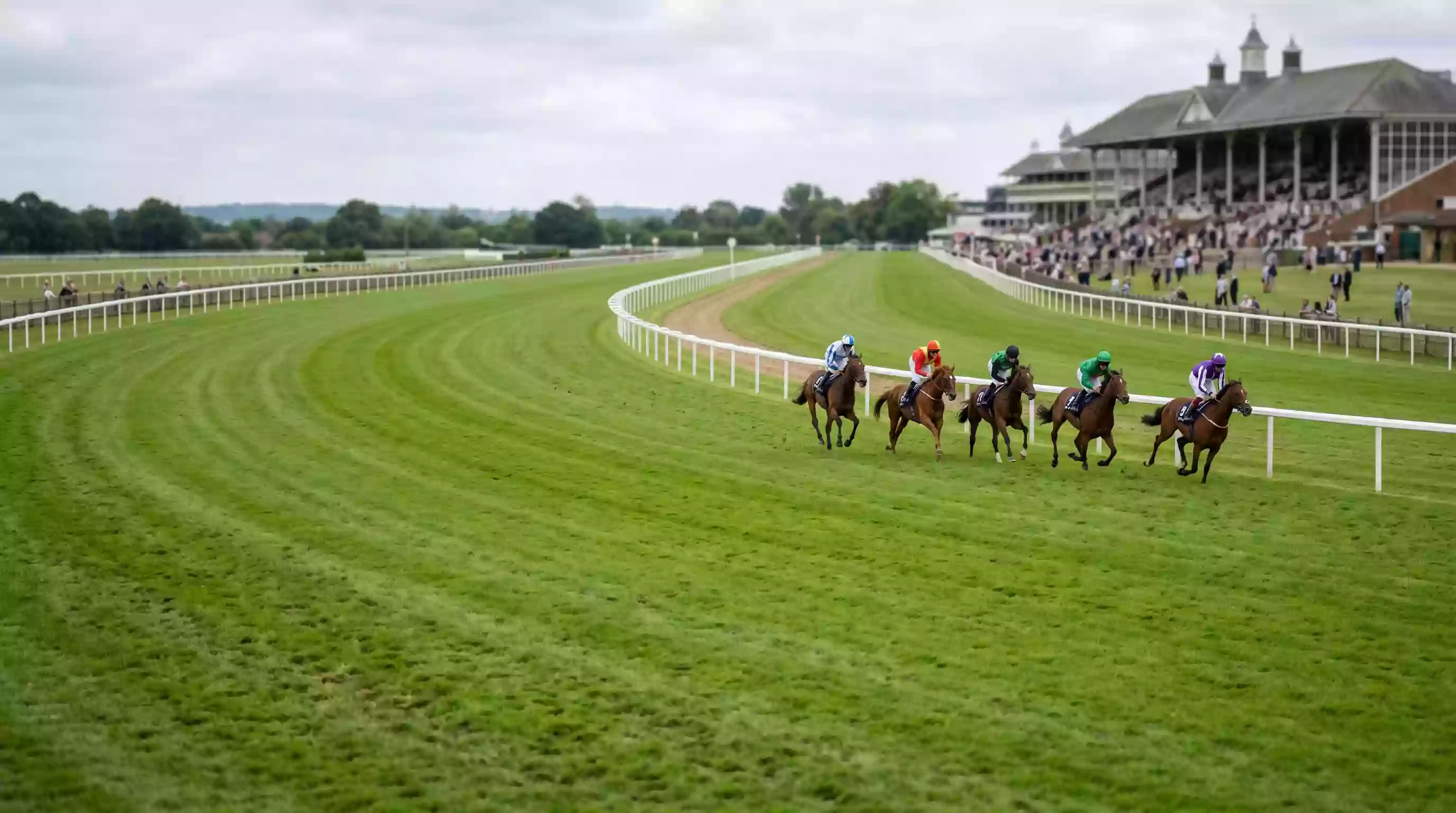
When I tell people I work in the horse racing betting industry, they picture jockeys and bookmakers. They do not picture the farrier shoeing a horse at 5am in Lambourn, the groundstaff preparing a racecourse at dawn, or the feed supplier delivering grain to 500 training yards across the country. Horse racing in the UK is not just a sport with a betting habit – it is an economic ecosystem that generates billions in revenue, supports tens of thousands of jobs, and sustains rural communities that have no comparable alternative employer. Understanding this ecosystem changes how you think about every bet you place, because every bet feeds into a system that keeps the entire operation running.
Racing’s 4.1 Billion Pound Contribution to the UK Economy
The British Horseracing Authority calculates that horse racing generates 4.1 billion pounds annually in direct, indirect, and induced economic activity for the UK economy. That figure encompasses everything from the direct spending at racecourses (gate receipts, hospitality, catering) to the broader supply chain (feed, veterinary services, transport, training facilities) and the induced effects of wages spent in local economies by the industry’s workforce.
To put that in perspective, 4.1 billion pounds is larger than the annual economic contribution of Premier League football to many of the regions where racing operates. The difference is that football’s economic impact concentrates in a handful of cities, while racing’s impact disperses across rural and semi-rural communities throughout England, Scotland, and Wales. Newmarket, Lambourn, Middleham, Malton – these are towns where horse racing is not just the biggest industry but, in some cases, the only significant employer.
The direct component is substantial on its own. Over 2.3 million people visited UK racecourses in the first half of 2024, spending money on admission, food, drink, and hospitality. The 59 active racecourses are economic anchors in their localities, generating tourism revenue and sustaining service businesses that depend on race-day footfall. The indirect and induced effects – the multiplier of every pound spent within the racing economy as it circulates through supply chains and wages – amplify the direct impact to the 4.1-billion-pound total.
How Betting Revenue Funds the Sport
The mechanism that connects your bet to the prize money on offer in a race is the Horserace Betting Levy, and the numbers are significant. For 2024/25, levy yield reached a record of approximately 108 million pounds, surpassing the previous record of 105 million set the year before. The HBLB committed 72.7 million pounds to prize funds in 2025, an increase from 70.5 million in 2024. Total HBLB grants, covering prize money, integrity, veterinary science, and other allocations, are expected to reach around 105 million pounds in 2025.
Without the levy, the sport’s prize money structure would collapse at everyday level. The big races – the Derby, the Gold Cup, Royal Ascot – attract sponsorship and owner contributions that would sustain them regardless. But the Tuesday afternoon handicap at Exeter, the maiden hurdle at Sedgefield, the novice stakes at Musselburgh – these are the fixtures that keep horses in training, jockeys in work, and trainers solvent, and they depend on levy-funded prize money to remain economically viable.
The relationship between betting and racing is genuinely symbiotic, though the balance of power has shifted. Ben Reilly, Flutter Entertainment’s Chief Commercial Officer, has acknowledged that football may have overtaken horse racing in absolute betting terms, but he emphasised that betting and racing have this great, symbiotic relationship. The revenue flows in one direction (from betting to racing via the levy), while the product flows in the other (from racing to betting via the content that punters wager on). When either side of this relationship weakens, the entire system feels it.
Employment Across Racecourses, Yards and Breeding Grounds
Horse racing supports approximately 85,000 jobs in the UK, encompassing a far wider range of roles than most people realise. Over 20,000 of these are directly employed across the 59 racecourses, more than 500 training establishments, and roughly 660 breeding studs. The remainder are in associated industries: veterinary practices, transport, feed and bedding supply, saddlery, farriery, media, and regulation.
The employment profile is unusual for a sport. It is heavily rural, it includes a significant proportion of skilled manual labour (stable staff, grooms, work riders), and it provides entry-level employment in areas where other options are scarce. A lad’s role at a training yard – riding out at dawn, mucking out stables, feeding and caring for horses – is not a high-paying job, but it is a skilled one, and in communities like Lambourn or Middleham, it is the foundation of the local economy.
BHA modelling showed that a harmonised gambling tax rate of 21% – which was under consideration during the 2025 Budget process – would have cost the racing industry approximately 66 million pounds per year and threatened 2,752 jobs. The tax rate was ultimately maintained at 15% for horse racing, but the modelling illustrates how sensitive the employment base is to changes in the revenue environment. A 6-percentage-point increase in duty would have eliminated roughly 3% of the industry’s total workforce – not through a single round of redundancies, but through the gradual erosion of prize money that makes it uneconomic for yards and courses to maintain their current scale.
What Threatens Racing’s Economic Contribution
The threats are real and interconnected. Declining betting turnover reduces levy income, which reduces prize money, which reduces the incentive for owners to invest in horses, which reduces field sizes and competitive quality, which reduces the betting product’s appeal, which reduces turnover further. This is not a theoretical loop – it is already visible in the data on everyday fixtures.
Brant Dunshea, the BHA’s CEO, described the situation in stark terms: the horseracing industry is in a precarious financial position, and the latest research provides a more catastrophic forecast than first thought, with thousands of jobs at risk across the supply chain, severely impacted towns and communities, and the potential for irreversible decline. That language – “irreversible decline” – is not typical of an industry body’s public communications, and its use signals the depth of concern at the highest levels of racing’s administration.
The Remote Gaming Duty increase to 40% from April 2026, while not directly taxing horse racing bets, reduces the cross-subsidy that online operators provide to their racing products from casino revenue. The Treasury expects an additional 1.1 billion pounds per year from the gambling sector by 2029, and that money is being extracted from operators whose racing expenditure – on odds, promotions, streaming, and market-making – will come under increasing scrutiny as their overall tax burden rises.
The unlicensed betting market compounds the pressure. Every pound wagered with an unlicensed operator is a pound that generates no levy, no tax, and no consumer protection. As the unlicensed market grows, the regulated sector that funds racing’s economic infrastructure shrinks proportionally.
Why Economic Context Makes You a Better Punter
Understanding the economics of horse racing does not directly tell you which horse to back in the 3:15 at Kempton. But it gives you a framework for understanding the market you are operating in – why odds on racing are structured the way they are, why promotional spend is tightening, why everyday racing is losing field sizes, and why the industry is so vocal about regulatory reform. Every one of these factors affects the value available to you as a punter, and the punter who understands the structural pressures is better positioned to identify where value is emerging and where it is being squeezed out.
The 4.1-billion-pound economic contribution, the 85,000 jobs, the levy that funds prize money – these are not just talking points for industry lobbying. They are the infrastructure that makes your bet possible. The racecourse where the race is run, the trainer who prepared the horse, the jockey who rides it, the integrity service that ensures the race is fair – all of these exist because the economic model works. The horse racing betting market is not just where you place your wagers. It is the engine that drives the sport you are wagering on, and being aware of how that engine runs makes you a more informed participant in every sense.
How many jobs does the UK horse racing industry support?
Approximately 85,000 jobs, including over 20,000 directly employed at 59 racecourses, more than 500 training yards, and roughly 660 breeding studs. The remainder are in associated industries including veterinary services, transport, feed supply, farriery, media, and regulation. Many of these jobs are in rural communities where alternative employment is limited.
Does every horse racing bet contribute to the sport’s funding?
Every bet placed with a UKGC-licensed operator on horse racing contributes indirectly to the sport through the Horserace Betting Levy, which is charged at 10% of the bookmaker’s gross profits on racing bets above a 500,000-pound threshold. The levy funds prize money, integrity services, veterinary research, and other industry needs. Bets placed with unlicensed operators do not generate any levy contribution and therefore do not fund the sport.
Created by the ”Horse Racing bet Website” editorial team.