Horse Racing Odds Explained: Fractional, Decimal and Starting Price
 Available in US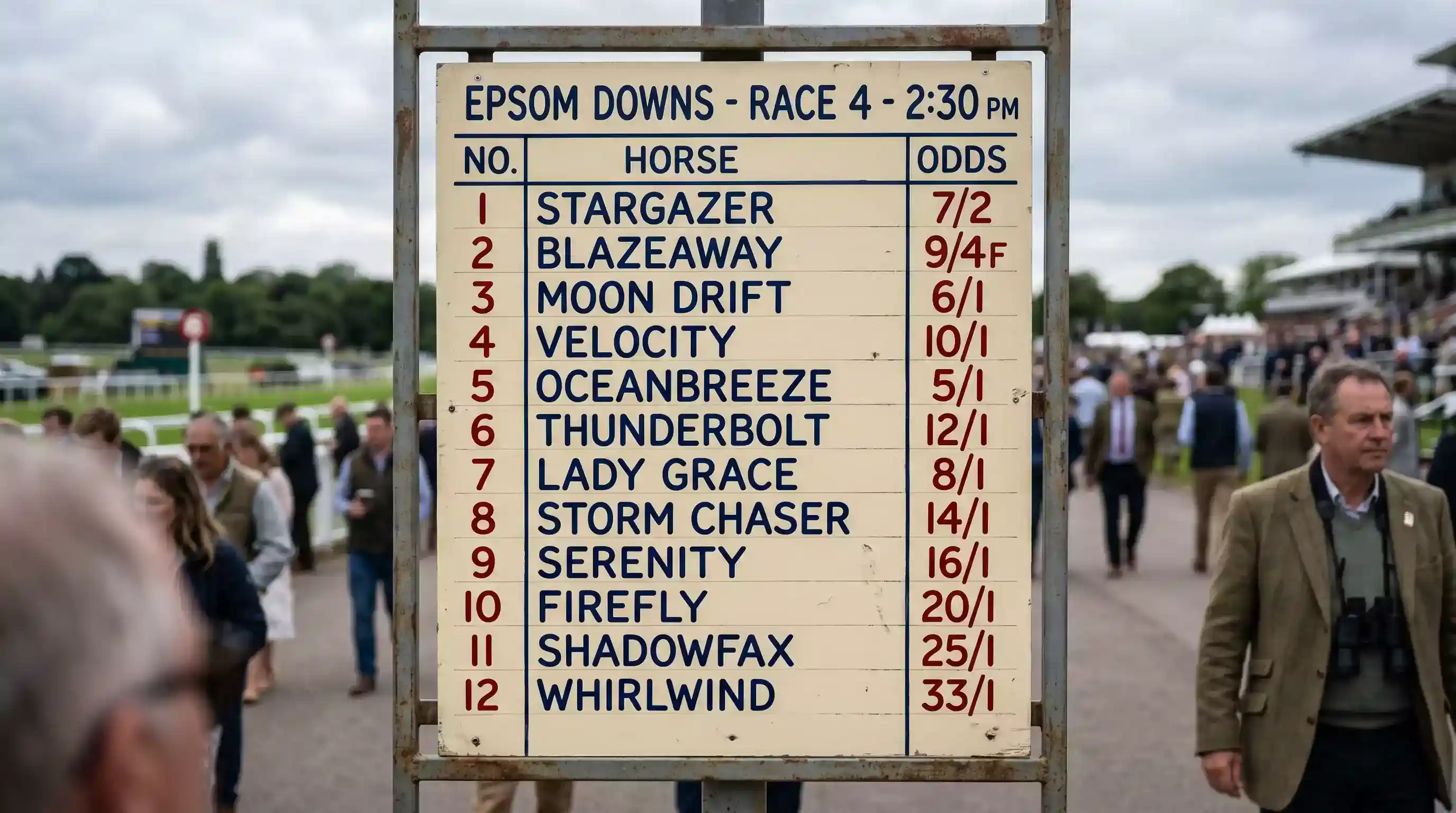
I spent the first six months of my betting life thinking I understood odds, and then I realised I had been miscalculating each-way returns the entire time. Fractional odds look simple – 5/1 means five pounds profit for every pound staked, right? Yes, until you start dealing with prices like 11/4, 100/30, or 6/4 and the maths stops being intuitive. Odds are the single most important number in horse racing betting, yet most guides treat them as a footnote between the welcome bonus and the sign-up button.
After nine years of analysing the UK racing market, I can tell you that misunderstanding odds costs punters more money than bad selections do. Not because the maths is hard, but because most people never move past the surface-level definition to understand what odds actually represent, how they move, and what those movements tell you about a race.
Fractional Odds: The Traditional UK Format
Walk into any betting shop in Britain and the prices on the board will be fractional. It is the format that built this industry, and despite the rise of decimals, it remains the default for most UK punters. The structure is straightforward once you grasp the core principle: the number on the left is your potential profit, and the number on the right is your stake.
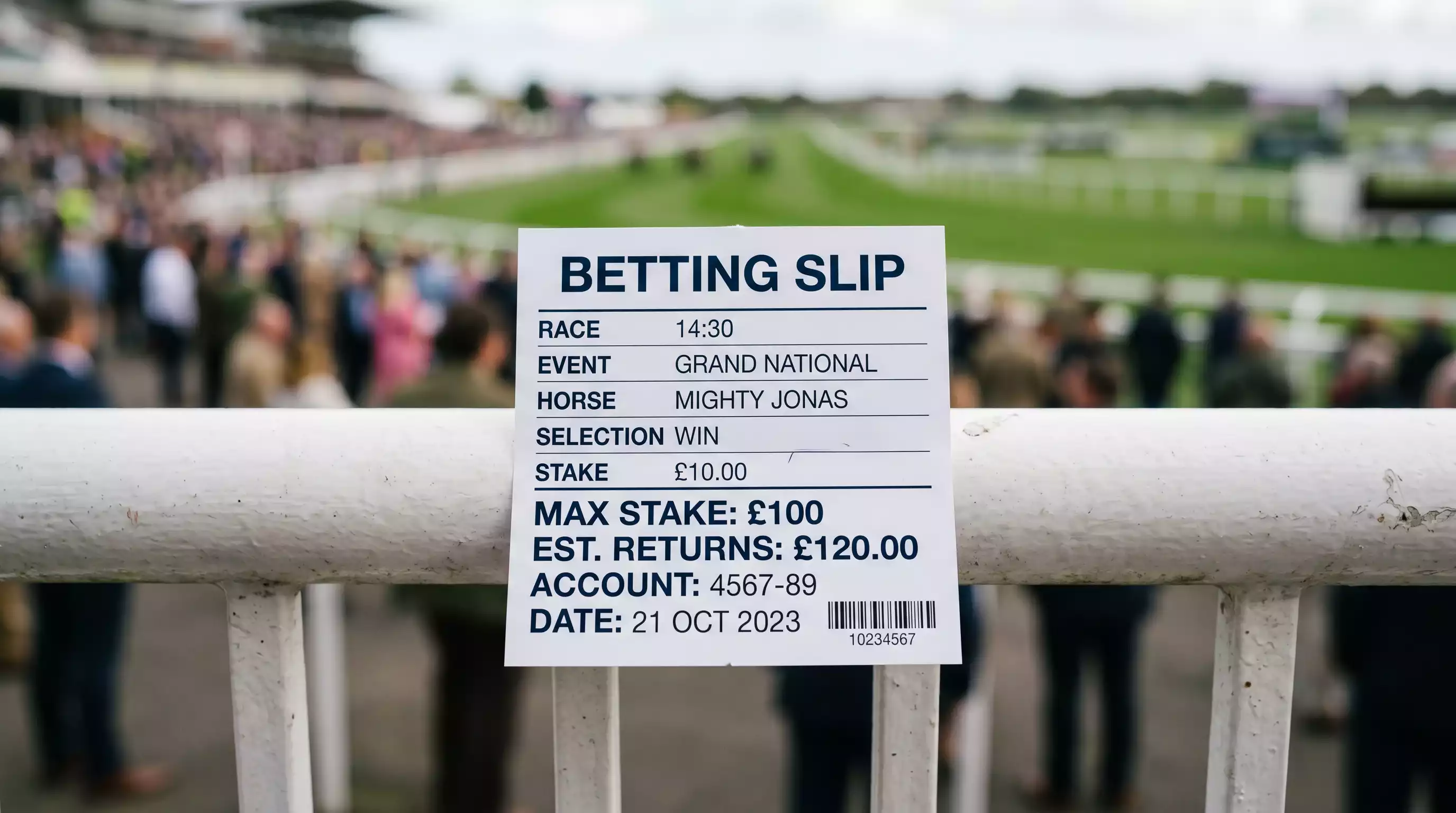
At 5/1, you profit five pounds for every one pound staked. At 2/1, two pounds profit per pound. At 1/2 – an odds-on price – you profit one pound for every two pounds staked. The total return always includes your original stake on top. So a ten-pound bet at 5/1 returns sixty pounds: fifty pounds profit plus your ten-pound stake.
Where it gets less intuitive is with prices like 11/4 or 9/2. These are not as neat, but the calculation is identical. At 11/4, divide eleven by four to get 2.75 – that is your profit per pound. A ten-pound bet at 11/4 returns 37.50 pounds (27.50 profit plus ten-pound stake). At 100/30, divide 100 by 30 to get 3.33 recurring – your profit per pound. The key is always the same operation: divide the left by the right, multiply by your stake, then add the stake back.
There is a historical reason fractional odds persist in the UK. They evolved from on-course bookmaking, where shouting “five to one” across a crowded betting ring was faster and clearer than shouting a decimal figure. The format is baked into the culture of British racing, and while younger punters increasingly default to decimals, fractional odds are not going anywhere. If you bet on UK racing, you need to read them fluently.
Decimal Odds and Why Some Punters Prefer Them
I switched to decimal odds around 2019, and it simplified my life immediately. Decimal odds represent the total return per pound staked, including the stake itself. A price of 6.00 means six pounds total return for every pound wagered. To find your profit, subtract one. To compare two prices at a glance, just look at the bigger number – no mental division required.
The conversion between formats is mechanical. Fractional 5/1 equals decimal 6.00 (divide 5 by 1, add 1). Fractional 11/4 equals decimal 3.75 (divide 11 by 4, add 1). Fractional 1/2 equals decimal 1.50 (divide 1 by 2, add 1). Most betting platforms let you toggle between formats in your account settings, and I would recommend anyone who does not already use decimals to try them for a week. The clarity when comparing odds across bookmakers is noticeably better.
Decimal odds also make it easier to calculate implied probability, which is the market’s estimate of how likely a horse is to win. The formula is simple: divide 1 by the decimal price, then multiply by 100 to get a percentage. A horse at 4.00 has an implied probability of 25%. A horse at 2.00 has an implied probability of 50%. This is not the true probability of winning – it includes the bookmaker’s margin – but it gives you a rapid way to assess how the market views each runner.
One note: decimal odds make the bookmaker’s overround more visible. If you add up the implied probabilities of every runner in a race and the total exceeds 100%, the excess is the bookmaker’s built-in edge. In a typical UK horse race, the overround sits between 110% and 130%, meaning the bookmaker has a 10% to 30% theoretical edge. Seeing this clearly is a feature, not a bug.
Starting Price: When and Why It Matters
The starting price – the SP – is one of those concepts that everyone in racing talks about but few people outside the industry fully understand. I remember a conversation with a fellow analyst where he described SP as “the last lie the market tells before the race starts.” That is slightly cynical, but there is truth in it.
The starting price is the official odds returned on a horse at the moment the race begins. It is determined by an on-course assessment of the prices available in the ring at the “off.” If you do not take a fixed price in advance (by clicking specific odds when placing your bet), your bet will be settled at SP. This matters because SP can be significantly different from the early prices available hours or even days before the race.
Here is a scenario I see regularly. A horse opens at 10/1 in the morning market. Money comes in throughout the day, and by the off, the price has contracted to 5/1. If you took the early price of 10/1, you are laughing – you locked in double the value. If you left your bet at SP, you are settled at 5/1. Conversely, if a horse drifts from 4/1 to 8/1, SP punters benefit while early price takers wish they had waited.
The decision between taking an early price or accepting SP depends on your assessment of which way the market is likely to move. If you believe a horse is underestimated by the early market and money will come for it, taking the price early is the smart move. If you suspect the early price is a trap – a horse with flashy form that sharper money will oppose – waiting for SP might deliver better value. There is no universal rule. It is a judgment call, and developing that judgment is part of what makes horse racing betting a skill rather than a lottery.
Why Horse Racing Odds Move and What That Tells You
Every time someone places a bet, the market moves. This is not theory – it is the fundamental mechanic of bookmaking. When more money lands on a particular horse, its odds shorten (get smaller) and the prices of other runners in the race lengthen (get bigger) to compensate. Watching these movements is one of the most useful analytical tools available to any punter, and it costs nothing.
There are three types of market move that I pay attention to. The first is the “steam” – a sudden, sharp contraction in price that suggests significant money from informed sources. When a horse goes from 8/1 to 4/1 in the final fifteen minutes before a race, somebody with knowledge or conviction has acted. Steamers win at a higher rate than the market average, though not at a rate high enough to guarantee profit if you chase every one.
The second is the “drift” – a gradual or sudden expansion in price. Drifters are horses that the market is moving away from, often because stable money has not materialised or because information has emerged (a change in going, a jockey switch, a poor warm-up) that reduces confidence. Significant drifts are worth noting, particularly when a horse that was expected to be well-backed suddenly goes from 3/1 to 6/1.
The third is stable pricing. When a horse opens at a price and stays there, it suggests the market has assessed it accurately and no new information is disrupting the consensus. This is the least exciting scenario, but it tells you something important: the market is confident in its assessment, and beating it requires genuine insight rather than arbitrage.
The online horse racing betting market generated GGY of 766.7 million pounds in 2024/25, and the entire edifice rests on the mechanism of odds formation and movement. David Matthews, CEO of Betwright, put it plainly when he noted that racing is commercially exposed – when a product is already marginal once taxes and fees are applied, it becomes harder to justify incremental spend versus higher-margin verticals. That commercial pressure feeds directly into how aggressively bookmakers price racing markets, which in turn affects the value available to punters. Understanding odds is not just about calculating your return; it is about understanding the market you are operating in.
Total betting turnover on British racing fell 9% in Q1 2025 compared with the same period the previous year, which tells you that the market itself is contracting. Fewer bets mean less liquidity, which can lead to less efficient pricing – and for the punter who understands odds deeply, less efficient pricing means more opportunities. The knowledge you build around odds is not academic. It is the edge that separates punters who last from punters who do not.
Putting Odds Knowledge Into Practice
Understanding odds formats and market movements is useful only if you apply it consistently. My practical routine before every bet involves three checks. First, I compare the price across at least three bookmakers offering best odds guaranteed to ensure I am not leaving value on the table. Second, I convert the odds to implied probability and ask whether I believe the horse’s true chance is higher than the market suggests. Third, I check whether the price has moved significantly from the opening show – and if so, I try to understand why before committing my stake.
None of this takes more than two minutes per race. It is not a complex system, and it does not require specialist software. What it requires is the habit of treating odds as information rather than decoration – a number that tells a story about what the market believes, which you can then agree with, dispute, or pass on entirely. That habit, more than any single bet type or strategy, is what separates informed punters from the rest of the field.
Should I take the early price or wait for the starting price?
It depends on your view of how the market will move. If you expect a horse’s price to shorten as more money comes in before the off, taking the early price locks in better value. If you believe the early price overestimates the horse’s chance and expect it to drift, waiting for SP may deliver a higher return. Monitoring market trends over time helps develop this judgment.
What do odds of 11/4 mean in horse racing?
Odds of 11/4 mean you profit eleven pounds for every four pounds staked. For a ten-pound bet, divide 11 by 4 to get 2.75, multiply by your stake (10) for a profit of 27.50 pounds, then add back your stake for a total return of 37.50 pounds. In decimal format, 11/4 converts to 3.75.
Published by the Horse Racing bet Website team.